Showing posts with label macro. Show all posts

Saturday, 8 September 2012

Google+ versus Facebook for photographers

I don't promote my photography heavily or work hard on networking with other photographers, but I do post on social media sites and over time I've noticed a shift in how photo posts are received.

Take a fairly mediocre macro shot like this:

The original had some issues with the composition but it stood out from the rest of the set because of the escaping bubble which I quite liked. A crop, rotate and slight tint improved it sufficiently that I thought it would be ok to publish, so it went up on Facebook and G+. The results are shown below.


The reaction on Facebook


The feedback on G+


While the comment rate was similar, six times more +1's were received than Likes. While I do have about 40% more followers on G+ than I have friends on Facebook, this does not suffice to explain the difference in response. I do not use restrictive privacy settings.

The main differences I can think of are:

- G+ gives a nearly full screen view of the image, while Facebook reserves considerable horizontal width for the description, comments, etc. The image looks better on G+.

- Reaching the right audience for each post is easier on G+ using hash tags, circles and events than on Facebook. There seems to be a strong self-organizing photography community on G+.

- People seem to be losing interest in Facebook, especially since the much-maligned migration to the timeline. The accounts remain active but public participation (sharing, commenting and liking) seems to be dwindling.

The second point, reaching the right audience, strikes me as being most important here. For me there is no doubt that if I was only going to be posting about photography in one place, then it would be G+.

Friday, 10 August 2012

Warmachine Cygnar miniature shoot

I don't have any experience shooting miniatures so when a friend visited me this summer on his way home from a tournament I jumped at the chance. The minis are 28mm tall Cygnar faction for the Warmachine tabletop game from Privateer Press.

The setup was very simple, using just the big lamp in the sky, white paper and two prime lenses - a regular 50mm and a 100mm macro lens on a Canon 60D. No flash or reflector was used.


The full set is at Flickr. I really enjoyed the shoot and it was quite different from what I usually work with. My friend was very happy with the result as well.


Sunday, 15 April 2012

Glasgow orchid fair 2012

The Glasgow orchid fair takes place in the Botanic Gardens every spring. As a free event it offers an excellent opportunity to see some very beautiful flowers and photograph them. This year was the first time I had a macro lens and the photos from the fair reflects this.


The full set of pictures is available on Flickr.


Creative Commons License
These photographs are licensed under a Creative Commons Attribution-ShareAlike 3.0 Unported License.

Monday, 9 April 2012

Macro photography

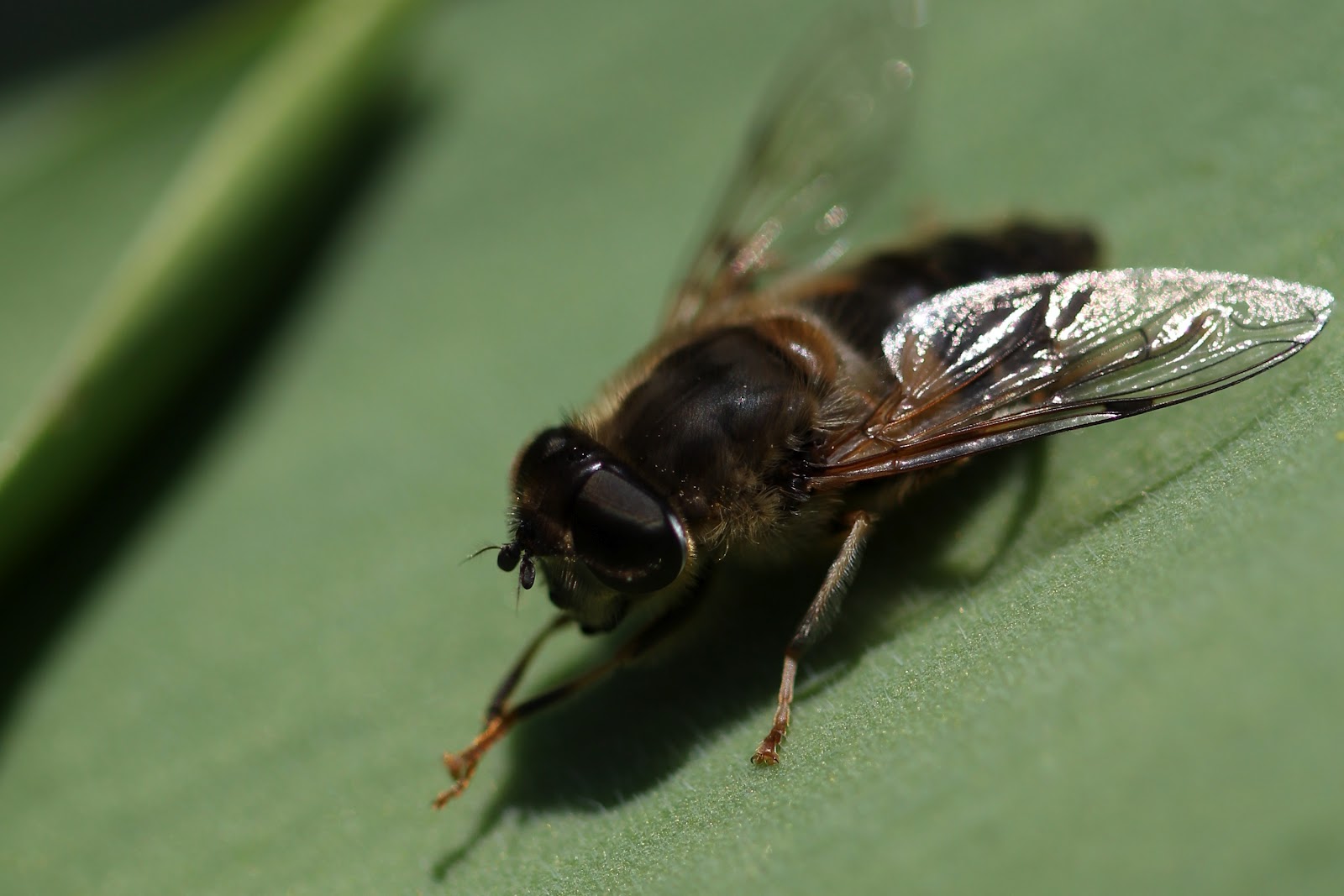
Reproducing subjects at 1:1 ratio or greater can reveal a world which is not normally visible for us to study closely without difficulty. Macro photography is commonly seen today with subjects such as insects and flowers, for example there is a large community on G+ tagging shots with #macromonday to share such photos. The Closer and Closer Macro group on Flickr has nearly a million photographs, demonstrating the popularity of macro photography.

A typical macro shot has razor sharp focus on the subject matter and a narrow depth of field (sometimes extended with focus stacking). The use of a ring flash or a flash diffuser is common in order to improve light conditions as the photographer needs to work very close to the subject. Tripods are not required but are very helpful in order to stabilise the camera when longer exposures are needed to compensate for poor light conditions and the subject can be relied on to not fly off while you are setting up the tripod.

Personally I use the Canon EF 100mm 2.8 USM lens on a 60D with a 430 EX II flash and a diffuser. Below are some sample photographs taken with the lens.


View on black here. This shot of a hornet has been cropped and rotated to improve the composition. Some photographers feel strongly that using crop to achieve a 'macro effect' is not appropriate. In this case the original shot was already a macro shot, as can be seen here. If you are shooting for your own enjoyment then there is no reason to worry about 'rules' but just be aware that some people may take a purist position.


This is a shot of an ice cube on a printed circuit board, with an air bubble (about 2 to 3 mm wide) trapped in the melting water. Again the shot has been cropped for composition. View on black here.


Euro coin, uncropped image shot af f/5.0, 1/400s with ISO 100 and no post processing (JPEG file straight from camera). View on black. Criticism of this picture would probably include that the coin is not fully in focus and that the subject does not fill the frame. A second light source would have been helpful as well.

In conclusion, macro photography can bring out previously unseen colours and details in the world around you. It can be great fun and range from very easy shots such as the coin to very difficult where the subject is prone to flee at the slightest provocation. There are some inexpensive ways, such as extension tubes, to get into macro photography or you can pick up some good glass - many macro lenses have excellent optical characteristics.